
Treat a market move as a signal only when it changes expected cash flows, risks, or valuation for your specific decision horizon: otherwise, treat it as noise. A four-question filter, drawn from the SEC’s own review of investor behavior, separates the two in minutes. The Sahm indicator and tools like Blue Prysm’s brand_signal tracking exist precisely because most price action fails that test.
TL;DR:
- Most market moves are noise unless they alter expected cash flows, risk, or valuation over your specific decision horizon.
- Use the four-question filter to determine if a move is fundamental: has a clear, material change in fundamentals occurred, and is it confirmed by independent sources?
- Record your thesis and timing before reacting to market moves, to prevent hindsight bias and ensure disciplined decision-making.
- Market conditions like liquidity shortages and algorithmic trading can make signals unreliable or amplify errors, especially during stress.
- Attention-driven reactions and overemphasis on headlines often lead to poor decisions, so verifying fundamental changes should always come first.
Defining signal versus noise across assets and time horizons
A signal is information that changes the expected distribution of outcomes for a decision you have already defined. The distinction sounds simple until you realize it depends entirely on who is asking and over what period.
A diversified pension fund holding a stock for a decade should ignore most quarterly volatility. The same headline can be decisive for a highly leveraged issuer sitting close to a covenant breach. Context, not the news itself, determines whether something counts as a signal. Research on frequency-dependent betas backs this up directly: market exposure measured at high frequency behaves differently than exposure measured over months, and opacity makes the high-frequency version especially unreliable for long-horizon inference.
Three questions anchor the definition before you go further:
- Does this information change expected cash flows, risk, or valuation for a decision you have already specified?
- Is the relevant horizon days, quarters, or years, and does the news matter on that horizon?
- Would an informed counterparty with no emotional stake in the position treat this as new information?
The SEC’s investor-behavior review frames noise trading as buying or selling with no fundamental basis, often tied to trend-following and overreaction. That framing is a useful gut check every time a chart looks more exciting than the underlying business.
The four-question filter you can run in ten minutes
When a market moves, most investors reach for a reaction before they reach for a process. Run these four questions first, in order, before touching a position.
- What actually changed in fundamentals? Look for a shift in cash flows, customer concentration, a covenant, or a regulatory decision, not just a change in sentiment.
- Is the change economically material for your thesis and position size? A 2% revenue miss on a name you hold as a small satellite position rarely justifies action; the same miss on a concentrated bet often does.
- Does it affect your investment horizon or liquidity constraints? A move that resolves in a week is often irrelevant to a five-year thesis, and vice versa.
- Has independent confirmation appeared? Look for alternate data, counterparty behavior, or a macro release that lines up with the story, rather than one source repeating itself across headlines.
This sequence mirrors the tests the SEC’s behavioral review recommends for catching frequent trading, panic, and momentum-chasing before they become costly habits.
Pro Tip: Write your answer to each question down before checking a price chart. The order matters: fundamentals first, materiality second, horizon third, confirmation last.
Turning a candidate signal into an action without hindsight bias
A filter tells you whether something might matter. A workflow tells you what to do about it, and it starts before the news even breaks.
- Define the exact decision you might make, your horizon, and what outcome you would consider acceptable, before you start investigating anything.
- Record your prior thesis and current position with a timestamp, so you cannot quietly rewrite your own reasoning after the fact.
- Classify the new information as fundamental, macro, technical, flow-driven, or narrative, and estimate how it would transmit into valuation if it holds up.
- Check liquidity, current positioning, and transaction costs, then act only if the expected distribution of outcomes has shifted enough to clear those costs.
The timestamped log is the part most investors skip, and it is the part that actually prevents hindsight bias from rewriting a bad decision into a reasonable one after the fact. Without it, every trade looks smart in retrospect and every process improvement gets ignored.
How regime, liquidity, and algorithmic trading change what counts as signal
The same headline can be a clean signal in one market regime and pure noise in another. Reliability itself is not constant, it shifts with liquidity and the mechanics of who is trading.
Evidence from the Review of Financial Studies links funding liquidity, hedge fund assets, and algorithmic trading activity to systematic swings in how efficiently markets price information. When funding is tight, prices can decouple from fundamentals even when the fundamentals have not moved.
High-frequency trading adds a second layer. A SEC working paper on HFT found that price synchronization from high-frequency activity tends to lower transaction costs and improve accuracy under normal conditions. The same mechanism can propagate and amplify pricing errors during stress, according to the SEC’s HFT research, which means a fast, synchronized move during a stressed market deserves more skepticism, not less.
Practical checks for regime quality include:
- Watch the TED spread and repo market stress for early signs that funding liquidity is tightening.
- Look for unusual cross-asset co-movement that suggests forced selling rather than fresh information.
- Note sudden withdrawals of market-making liquidity, a classic sign that the tape has stopped reflecting genuine price discovery.
- Check option skew for signs that hedging demand, not fundamental conviction, is driving the move.
Behavioral traps that turn attention into false signal
Most costly signal misreads are not analytical failures, they are attention failures dressed up as analysis. The SEC’s review of investor behavior documents a consistent pattern: investors disproportionately buy attention-grabbing stocks, and those stocks tend to underperform the ones they sold to buy them.
Noise trading, the disposition effect, and a tendency toward frequent active trading round out the list of habits that erode returns over time. A subtler trap is dataset selection: letting a headline choose which data you look at next, which quietly biases the entire analysis toward confirming the story rather than testing it.
- Attention is not information: a stock trending on social feeds has not necessarily changed its fundamentals.
- Noise trading, or trading on price action with no fundamental basis, tends to correlate with overreaction and trend-chasing.
- The disposition effect, selling winners too early and holding losers too long, distorts decisions that should be driven by the filter, not by regret.
- Frequent active trading, especially in response to short-term moves, has a well-documented tendency to underperform a more patient approach.
Pro Tip: If a headline made you open a trading app, write down your thesis before you look at the price. That single habit catches most attention-driven mistakes before they cost anything.
Operationalizing the workflow: a first-party example
Here is the filter in practice. A portfolio manager sees a competitor’s product announcement move a holding 4% intraday. They timestamp the prior thesis, run the four-question filter, and find no confirmed change in cash flows, just a press release and a wave of social commentary. No action, logged and dated.
- Blue Prysm’s market-analysis platform supports this kind of hypothesis logging and real-time competitor tracking, which makes the confirmation step faster to run.
- A structured intelligence briefing format is a useful template for recording the classification and confirmation steps before any decision gets made.
- Practical examples of reducing attention-driven reactions through real-time monitoring show the same discipline applied at the company-strategy level, not just in trading.
Why the filter matters more than the news itself
I once nearly acted on a supplier rumor that lit up a sector-wide sell-off within an hour. Running the four questions took ten minutes and turned up no confirmed change in fundamentals, just one unverified post and a lot of amplification. I logged the thesis, waited for a second source, and the story died by the next morning. The takeaway I keep coming back to: write the question down before you touch the position, every time.
— Colin Bowdery
Bring the filter into your own strategy process
Running this filter by hand works, but it takes discipline most people lose the first time a market gets loud. Blue Prysm’s market-analysis platform builds the logging, competitor tracking, and confirmation steps into a single workflow, so the four-question filter becomes a habit your team actually follows instead of one you mean to follow.
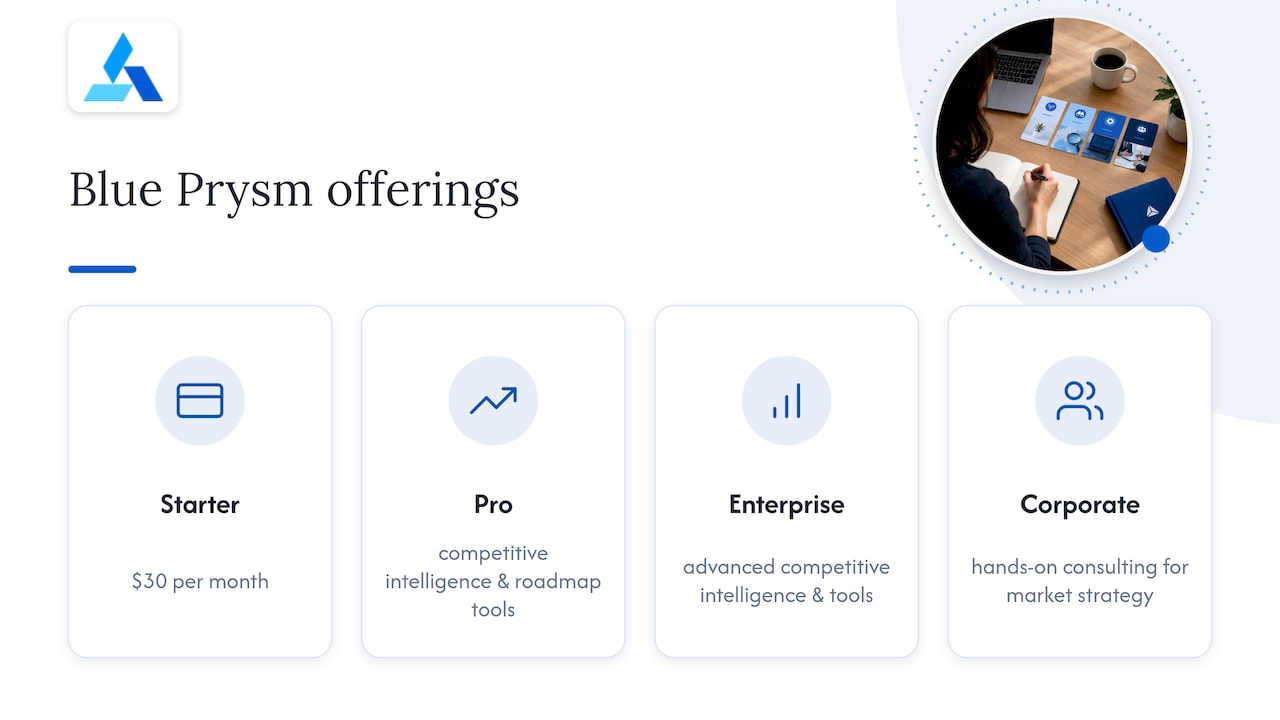
For businesses ready to put this kind of process behind their strategic decisions, the Starter plan runs $30 per month, with Pro and Enterprise tiers available for teams that need deeper competitive intelligence and roadmap tools. If your strategy work needs a more hands-on push, our Corporate & Growth Strategy engagement applies the same signal-versus-noise discipline to your market position, not just your portfolio.
Check Blue Prysm’s pricing to find the plan that fits your team’s decision-making process.
Sources
Confirmation is where good process either pays off or quietly falls apart. Some sources are worth trusting, others are worth treating with real suspicion.
- Behavioral patterns and pitfalls of U.S. investors (SEC compilation)
- Daily data is bad for beta: Opacity and frequency-dependent betas (Review of Asset Pricing Studies)
Practitioner guidance on the Sahm rule makes the same point from a different angle: classification depends on the specific asset, decision, and horizon in front of you, not on a universal rule of thumb.
FAQ
What is the difference between a signal and noise?
A signal changes the expected cash flows, risk, or valuation relevant to a specific decision, while noise is short-term variation or attention-driven activity that does not. The SEC’s investor-behavior review ties noise trading specifically to buying or selling with no fundamental basis.
How do I know if a market move is worth acting on?
Run the four-question filter: check what changed in fundamentals, whether the change is material to your thesis, whether it affects your horizon, and whether independent evidence confirms it. If any answer is unclear, treat the move as noise until confirmation appears.
What is 80% signal and 20% noise?
There is no established statistical definition behind that ratio in market analysis: it is a popular shorthand rather than a measured figure. The useful version of the idea is qualitative, most raw market information is low value and only a small share changes a well-defined decision.
Why do real-time macro indicators sometimes mislead investors?
Real-time indicators like the Sahm indicator are built on current-vintage data that can later be revised, so a single reading can shift after the fact. Treat any real-time macro release with vintage awareness and confirm it against a second indicator before acting.
How does high-frequency trading affect signal reliability?
High-frequency trading tends to synchronize prices and lower transaction costs under normal conditions, according to SEC research, which generally improves price accuracy. During stress, that same synchronization can spread pricing errors faster, so a fast, uniform move across a stressed market deserves extra scrutiny rather than less.