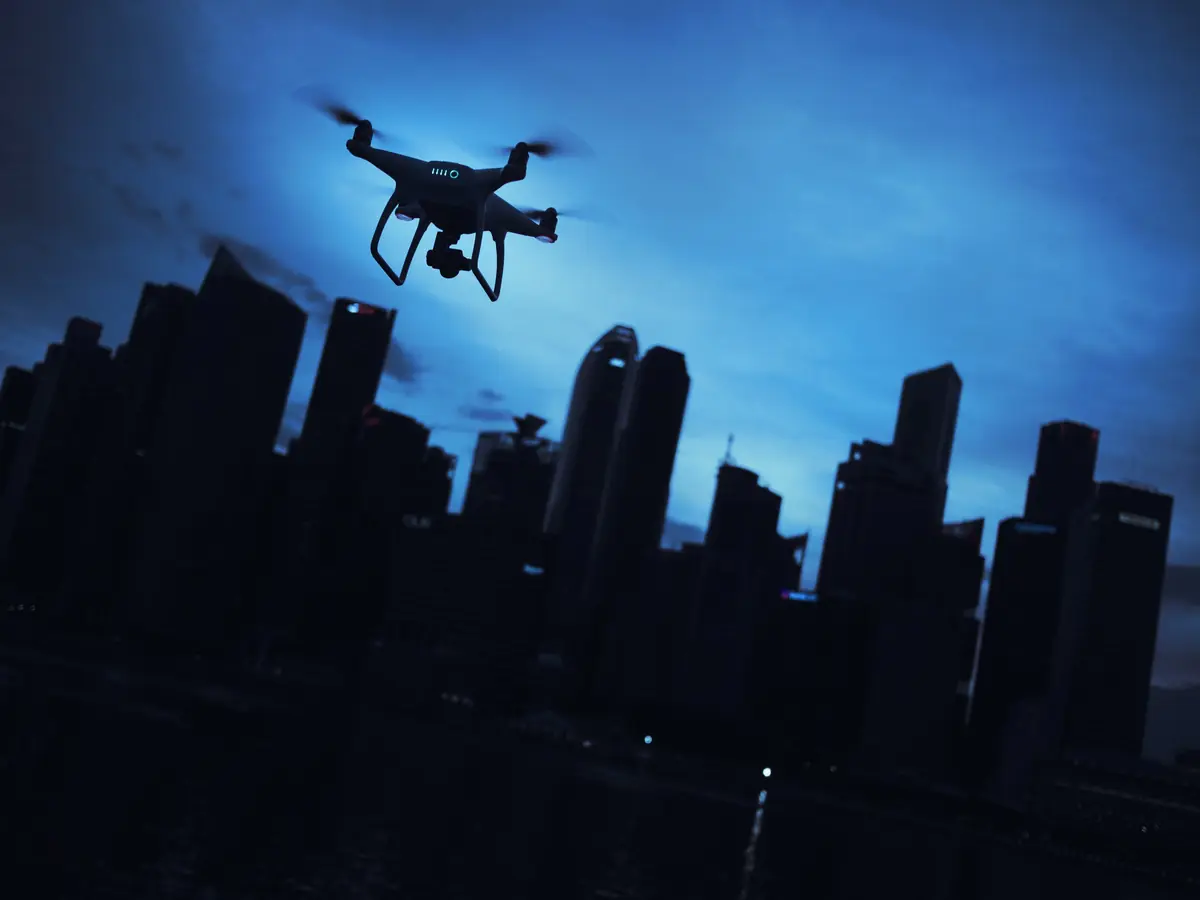
Analysis · Integrated Sensing and Communications
Five questions about integrated sensing
A mobile network that senses is a radar, and a weak one beside a purpose-built radar: a metre and a half of range resolution against the metre the standard asks for, and echoes that fade with the fourth power of distance. It remains the most discussed 6G feature, and it is paid for in airtime a carrier has already bought at auction. Read the five parts to find out:
- how finely a network can see, band by band, against what 3GPP asks of it
- what the standard has agreed, what is still study and what is decided next
- what sensing costs in airtime, power, timing and sites, and what that airtime is worth
- how far a base station can see a drone, a person or a car
- who is paying for sensing today and whether a mobile licence lets a carrier sell it
Download eBookFirst edition, October 2026 · 60 pages
The parts
Part 01What a network can seeWhat can a cellular network resolve at each band, and what does the standard ask of it?The widest 5G carrier below 7.125 GHz is 100 MHz, which separates objects about 1.5 m apart in distance. Four of the seven categories in TS 22.137 require a metre or finer, which takes 150 to 400 MHz in a single channel. The 400 MHz channels planned for 6G around 7 GHz, and already optional in millimetre wave, resolve 0.375 m. Angular resolution is far coarser: a standard eight-column macro panel at 500 m cannot separate two objects less than about 125 m apart.3GPP TS 22.137 · TS 38.101 · TR 38.765Part 02What the standard has agreedWhat is normative, what is still study, and what is decided next?The only cellular sensing product in normative work is a base station detecting drones with its own echo. It rests on TS 23.137, approved at SA#113 in September 2026, and the RAN work item RP-261566, revised as RP-261901, whose four new specifications are due for approval at RAN#115 in March 2027. On privacy, TR 33.777 concluded that “no solution will be specified”. Whether the base station reports points or objects stays open until RAN#114 in December 2026.3GPP TS 23.137 · RP-261901 · TR 33.777Part 03What sensing costsWhat does sensing take from the network, and what is that worth?In 3GPP’s own evaluation, drone sensing met every objective from a single site in only 3 of 11 sources, and from several sites fused in 9 of 10. Companies reported sensing taking from 1.43% to 28% of the carrier’s resources, with a median of 7.14%. Listening while transmitting caps power at 52 dBm with 80 dB of isolation. At the C-band’s $0.852 per MHz-POP, each 1% of a national 100 MHz carrier is $290M of licence value, so the median share is worth $2.07B.3GPP TR 38.765 · R1-2601668 · FCC Auction 107Part 04What survives the link budgetHow far can a base station see a drone, a person or a car, and which uses survive?On thermal noise alone, an n77 macro would see a small drone of −12.8 dBsm at 1.1 km with a 5 W wide beam and at 7.6 km with 52 dBm in a narrow one. Measured single-site detection stops at 500 m to 1 km. Five constraints the noise budget leaves out (a wide search beam, target fluctuation, one building’s clutter, residual self-interference and the receive window) take the 7.6 km down to about 1.4 km before elevation coverage is counted. What survives is drone tracking in dense grids with several sites fused, and the protection of named sites.TR 38.765 · TR 38.901 · 47 CFR 27.50 · Nokia Bell LabsPart 05Who pays for sensingWho is paying for network sensing, and who is allowed to sell it?No carrier anywhere discloses sensing revenue. The FY2025 10-Ks and second-quarter 2026 10-Qs of AT&T, Verizon and T-Mobile never mention sensing, drones or radar, and China Mobile’s filings describe only trial networks. The first paid US offer is Lockheed Martin’s NetSense on Verizon, a subscription due for general availability in 2027. A Part 27 or Part 30 licensee may provide only the services its band is allocated, which means fixed and mobile, and the FCC has opened no proceeding on network sensing.47 CFR 27.2 · 6 U.S.C. 124n · SEC filings · DSK
The other series
 Seven questions aboutdirect-to-deviceTwo satellite operators may transmit on American mobile spectrum, and both rent it.FCC · SEC · CelesTrakRead the series →
 Eight questions about6G6G has a calendar with meeting numbers on it: specifications frozen in December 2028, the first American auction in April 2027 and the conference that settles the spectrum in late 2027.3GPP · ITU-R · FCC · SECRead the series →
 Five questions aboutAI in telecom operationsAI is the lever every operator names in its cost programme, and no annual report puts a currency figure on what it has saved.SEC filings · earnings calls · 3GPP · FCCRead the series →
 Five questions aboutnon-terrestrial networksAltitude makes the first four design decisions before anyone at a satellite company makes one, so the stratosphere, low orbit, medium orbit and the geostationary arc are four different businesses.CelesTrak · FCC · SEC · NTIA · ITU · 3GPPRead the series →
 Five questions aboutprivate networks and neutral hostThe shared band at 3.5 GHz was sold as the home of the private network, and mobile and cable operators paid 86% of the money.FCC · NTIA · SEC · ITU-RRead the series →
In preparationSpectrum & Network Economics
If this is on your desk
Our 6G roadmap needs a business case.
We work this decision through with your team. The first step is a one-day teardown: a 90-minute working session and a written answer two working days later, with the model behind it yours to keep.